Re:filtered #30: Foraging after the funnel
A great tit, a screaming hairy armadillo and a reader chasing a rabbit hole all obey the same rule. A fifty-year-old idea from ecology, as AI reroutes how people find things.
Greetings from Austria and welcome to the 30th edition of this monthly newsletter on civic media in a moment of systemic disruption.
I am moving to Vienna. For the past few weeks I have been outsourcing a lot of my settling-in to chatbots: rental prices and neighborhood-vibes (I'm told I'm moving to the local equivalent of Bushwick or Sham Shui Po); how to incorporate and do accounting, what that does to my tax burden (pain!) and how public healthcare works (gain!); where the best restaurants are; what the politics of my future home district are.
When I didn't want to bother friends, I found myself asking LLMs for so much of it. I read the answers, took what I needed, and for so many of these questions never clicked through to a source underneath.
I had unintentionally demonstrated an information theory whose essentials were worked out decades before any chatbot existed, in the feeding behavior of animals.
Where the idea comes from
In the late 1990s, Peter Pirolli and Stuart Card at Xerox PARC sought to explain how people move through information. They borrowed a framework from behavioral ecology called optimal foraging theory, which models how an animal decides where to feed and when to give up on a patch and move on.
They treated people as informavores, organisms that try to get the most information for the least effort, and called the result information foraging.
The theory has three moving parts:
There is information scent, the cues a source gives off, a headline, a snippet, the design or jingle that let you guess whether it is worth your time before you commit to it.
There is the patch, any source you stay inside until the returns thin out, then leave.
And there is the diet, what you choose to consume at all. Keep all three in view, because the strategy at the end of this comes back to them.
The engine underneath is the marginal value theorem, formalized for animals by Eric Charnov in 1976: you abandon a patch the moment its yield drops below the average yield available elsewhere, once you account for the cost of traveling to the next one.
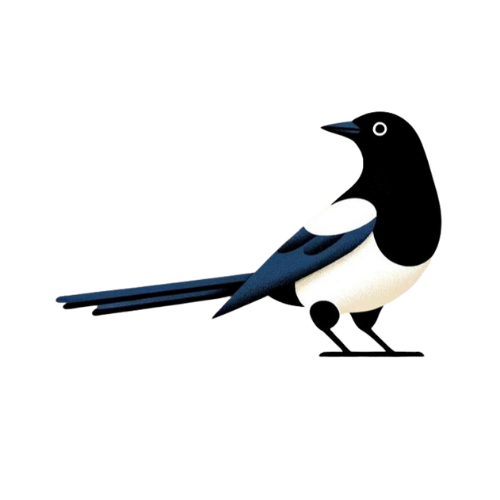
The model organism is the great tit, a highly intelligent, inquisitive bird. In a 1977 study, R.A. Cowie starved the birds a little and let them forage through patches. They stayed longer in each patch when the patches sat farther apart, just as the theorem predicts.
Two decades later Naef-Daenzer clocked great tits foraging about 30 percent more efficiently than random chance would manage, because they lingered where the food was rich and gave up where it was thin.
This behavior isn't limited to smart little birds: Screaming hairy armadillos and guinea pigs follow the same curve, though those two, somewhat endearingly, tend to overstay, working each patch a little past the moment they should have left.
In terms of information foraging, we all are probably somewhere between the great tit and the screaming hairy armadillo. The regularity runs deep enough that a hungry bird, an oblivious armadillo and a middle-aged man researching Viennese tax law all obey a version of it.
Every time a cheaper and closer patch has turned up, people have emptied the others faster. In our information spaces, it happened in the 19th-century cafés and taverns, Google Search, Wikipedia, social feeds. Now the chatbot you can ask anything provides the steepest drop in travel cost to information we have seen.
In terms of information seeking, the theory is named for foraging, but that covers only one of our two moods. The second one carries a spear.
Foraging is the open mode: you browse for a general sense of things and take value bit by bit, ready to be surprised.
Hunting is the targeted mode, a fixed and known need going after one specific thing, the chase for a single informational mammoth. The field calls it known-item or lookup search. I find hunting clearer, and the theory already pictures us as predators stalking prey across patches, so the word is not much of a stretch.
Most of my moving-to-Vienna questions were hunts. Reading the excellent Falter morning newsletter on what's new in Vienna has become my new foraging routine.
Marcia Bates caught the foraging end in 1989 with what she called informational berrypicking, a search where the need itself evolves as you go, against the older idea of assumed intentionality, of a single fixed query answered in one shot.
The two modes want different things from a publishing strategy and offer different service opportunities. A hunter wants the best answer they can trust, and then leaves. A forager wants the delight of predictable surprise and a place worth returning to. Serve one as if it were the other and you will misread both who is in front of you and what would make them stay.
That is also why it is hard for publishers to judge themselves with analytics that cannot tell the two apart. A forager who skims the homepage every morning and a hunter who lands once on a single deep piece both show up as traffic.
The page-view counts flatter whatever happens to draw clicks and stay quiet about what people actually came for, which is why a foraging service can look weak next to hunting traffic, and why people want a topic can never really be read off a dashboard.
What AI changes
The chatbot is a patch with almost no travel cost and almost no friction, which by the logic of the marginal value theorem is the kind of patch that drains all the others. It does the shallow, one-off job very well, and it does it without sending anyone anywhere (although in our tests we have shown how it betrays the marginalized users like blue-collar workers in China).
That breaks the funnel most media strategy is built on: awareness, then search, then a visit to your site, then retention. It took for granted that people reached you by searching and arriving, because that overwhelmingly happened. Now many will do neither.
The old funnel had two major on-ramps: search and social. Hunters arrived by search, typing a known need into a box. Foragers arrived by social, pulled in by scent, a headline, a trusted name, a recommendation in their feeds. The chatbot eats the hunter's on-ramp most completely, because answering a fixed question is exactly what it does best.
Foraging discovery survives. The scent that pulls you in is still carried by a person on the other side, although that space is fragmenting fast.
This is uncomfortable for anyone hoping that a citation in an AI answer amounts to distribution, and for the news organizations trading access to their archives for metrics or ephemeral visibility or retrieval-based compensation.
The case for it is not nothing but also not very much. There may be a public-interest argument to do this: if credible sources opt out, bad actors fill the space, and you would rather the model quote you than them.
The cited source shapes the answer, and shaping what a great many people are told in these superficial exchanges is real influence in their lives and decision-making.
But influence is not lasting without a relationship. A quote in an answer brings reach you cannot see and almost nothing back. It is profoundly ephemeral. The model handles the flat job and walks away, and no scent attaches to you, nothing the reader could follow back to a person or a place. Being mentioned once is a long way from being someone people return to.
Your value proposition has to survive the shift
If the funnel is breaking, the question shifts from "how do we reach people?" to "what do we still own when a platform or a model changes the rules?".
I have seen only two answers worth much, and each belongs to one of the two modes. If you have others, or thoughts, or disagree, let me know.
The first is a relationship, which is what holds a forager. A forager follows a voice and often comes back in a rhythm you set, on Friday or with the morning brief or weekly podcast, so the return is yours to build.
The second is exclusivity, which is what holds the rare hunter. A hunter often reaches for the source they trust when an event sends them looking, a return you cannot schedule but can be standing ready for.
Everything else you rent from corporate algorithms, and that rent keeps climbing.
The relationship that survives is parasocial, an ugly word for something everyone already does. In the language of the theory, a recognizable, trusted voice is scent. It is the signal that tells a forager, before they have read a word, that this patch is worth entering.
Pivot fans tune in for Kara Swisher's voice and judgement as much as the business news. Casey Newton's audience followed him out of The Verge to Platformer, because the thing they subscribed to was him, not the masthead, and this month again with Kevin Roose out of the New York Times. Ben Thompson built Stratechery into a business in this way, a daily analysis people pay for because they trust the person writing it, a model so durable that Substack was in part built to copy it.
That voice is also how a forager outsources their diet. Deciding what is worth consuming is work, and people happily hand it to a curator they trust.
Successful curation is not a lazy substitute for reporting; it competes on different modes. It is the diet you set on the reader's behalf, and it is only ever as good as the sustained experience behind it.
Newsroom executives keep relearning the hard way that any voice is portable, which means it can walk, and the audience more often belongs to the person rather than the institution. One answer is to decide whose voices you are willing to build around, and to make the institution the place those voices live rather than the cage they want out of.
The cadence habit runs on a clock we wind ourselves: pick a slot, keep it religiously, and people return because it is Friday, or because the brief landed like it always does. It is the standing coffee date of media.
The reflex habit runs on the other clock, the one the world winds. We cannot set it off, only make sure we are the first place people think of when something breaks. Less a coffee date than a fire alarm, and it only works if the cadence has kept us in view between emergencies.
That makes the rhythm of publishing a strategic question closer to service design than to a publishing schedule, and it is the deeper reason the forager's habit and the hunter's reflex usually have to be built as two separate services, not two settings on the same one.
Touch points after the funnel
A touch point is any moment your work brushes against someone's day: a headline in a feed, a quote inside an AI answer, a podcast half-heard in a taxi ride, a screenshot a friend forwards with a line of their own on top.
The funnel pretended there were only a few that really counted, like the visit to your homepage, but disruption forces us to think bigger.
Touch-point thinking drops that assumption and asks a better question of each contact: how is this showing up in someone's life right now, and what would make the next moment with you more likely.
A generic AI answer is one such touch point, and the shallowest kind, the all-you-can-eat buffet you won't remember a single dish from.
But the buffet never killed the restaurant. Media survive the chatbot the way restaurants survive the buffet, on proximity, identity, a particular nutrition, novelty. Almost no one flies to Copenhagen to eat at Noma because they're hungry.
So the old question, how do we get found, splits into two harder ones: how does anyone discover the patch at all, and what keeps it theirs once they have.
The answer to the first is increasingly another person, a forwarded link, a voice they follow, a colleague who thought of them. The unit that matters is the handoff, not the visit.
This is older than any platform. My aunt Irma knows spots for mushrooms and wild garlic in the forests above our hometown, patches she shows only to people she trusts, on the understanding that you will not strip them bare or hand the map to strangers.
The best stuff has always moved person to person, as a small gift between people with a bond. Networked distribution is that instinct running through phones and feeds, and you earn your place in the chain by being something people are glad to pass along.
Which makes many news sites forager's patches, less a front door than a back room, where people come when the quick answer was never the point, and where surprise and connection are kept.
The metrics have to move with all of this. Page views and sessions described the old funnel well and the new world badly. What is worth counting now is subscriptions and follows, which stand for a relationship you own; shares, which stand for the network; citation and presence in AI answers, which stand for influence; and the key question we ask at Service Desk, whether anyone would actually miss you if you stopped.
In other words, attention that someone chose to give you, not the raw size of a crowd. That is the only kind that turns into trust, and eventually into influence and the money to keep going. Reach on its own no longer does either.
We just built a five-minute gut-check for anyone to see whether their strategy is built to reach people or to actually matter to them.
This isn't the end
I do not read any of this as decline. The useful response is not to panic and reopen Noma as all-you-can-eat the moment nobody goes hungry. Cheap and infinite has never killed good and particular; haute cuisine did not disappear when societies overcame scarcity, it just stopped being about hunger.
The breaking funnel was never a true picture of how information moves, only a convenient one while the platforms sent enough traffic to fake it. In its place the foraging lens offers not a forecast but three things to be clear about.
First, the relationship is the asset (duh!), shaped by a service experience.
The question for any venture is whose attention it owns, through a subscription or a follow, rather than rents from a search engine or a feed and can lose overnight.
Second, decide which mode you serve.
A forager's habit and a hunter's resource are different services, with different cadences, formats and measures of success. Try to be both without choosing and you become a thin version of each, which is exactly where the model already wins.
Third, cadence and voice are not a coat of paint on the reporting.
They earn the return visit, they are the part a model cannot reproduce, and they deserve the planning of a beat or a hire, not left to whoever happens to run the newsletter that week.
The rest is pragmatic honesty about what people actually come to you for, then the patience to build a habit around it.
Strip a chatbot's answer to nothing and you see what it leaves out: the scent that told you whom to trust, the diet someone curated for you, and the one patch you walk back to, season after season.
Looking back
Last week in Vilnius I ran a workshop with Valentina Aguana and Callum on AI bias at GlobalFact, and it was fantastic.
Teams sat down with our prototype (we called it AIdas, echo in Lithuanian) and debated how different models handle sourcing and push-back on contested topics we provided or they chose: Iran/US, Ukraine/Russia, China (Xinjiang), Brazil (Bolsonaro's trial), and far-right rhetoric across Europe. (This is building on research with ASL19 and the Open Technology Fund in China and Iran. You can see some visualizations of the Iran research here.)
It did what we hoped: people ran the same question across models and read the differences in bias, sourcing, and push-back, side by side.
The response was bigger than we expected (so many people ran it that we burned through our token budget and had to pause it), so we have decided to build the prototype out properly and work with partners to bring it to schools and newsrooms, and to expand the testing systematically over time.
In Brussels, friend Alena Epifanova and I made our case for a European internet freedom strategy to a crowd of technologists and officials at the Digital Future Dialogue. I'm learning to speak in ways that are understood in Brussels, which is an interesting learning curve after the Hill, and totally different.
And Madison Karas and I got published in Touchpoint, the leading publication among service design practitioners, on lessons from the collapse of the frontstage in journalism, and consequences for services elsewhere. In it, Jen Briselli also has an excellent piece on learning as an organizational North Star.
Looking ahead
If AI bias and sourcing is of interest and you would like to get involved, get in touch.
The next workshop will take place in Minneapolis at SRCCON, July 8 and 9, hosted by Madison and Aaron.
We're finalizing the selection of the second cohort of the Newsroom Pivot Program with the JxFund and the Center for Sustainable Media.
In the selection interviews, I remain struck by how widely the past journalist-support donor world has socialized performative public-good expectations that sound nice but have no chance of relevance.
The idealism is not harmless: it leaves people exposed, taught to chase a funder's approval instead of building something people would miss, and stranded when the grant runs out.
But this is changing. I'm excited to see new kinds of revenue ideas getting worked on and tested, and these conversations slowly becoming normal. That can't happen soon enough.
Curious where your own editorial work sits, content, product, or service? Our five-minute gut-check is a quick way to find out: do people value you, need you, or just read you?
Thank you for overstaying this patch. The great tit would have left paragraphs ago. The screaming hairy armadillo, bless it, reads to the end.
I am delighted you stayed. Back for more foraging next month.