
'Lifetime civic value' as a media impact metric
A proposal for non-profit newsrooms to measure impact through the civic actions their work enables, not through reach.
Assume you run a nonprofit newsroom. You cannot, or choose not to, charge your audience. But you must show impact to the funders who keep you alive, and the old way of showing it, reach and engagement numbers, means less every year.
Here is a different starting point: measure the relationship people have with you, and what they do with it. In one line: count the civic actions your work enables, per reader, over the life of that relationship.
(Updated July 2026)
Borrowing a tool from business
Commercial media have a mature tool for valuing relationships, called customer lifetime value. It answers a simple question: how much is one subscriber worth to us, over all the years they stay?
It takes three steps:
- Work out how much revenue the average subscriber brings per year.
- Work out how long the average subscriber stays (a rough shortcut: if you lose 20 percent of your subscribers each year, the average stay is about five years).
- Multiply the two.
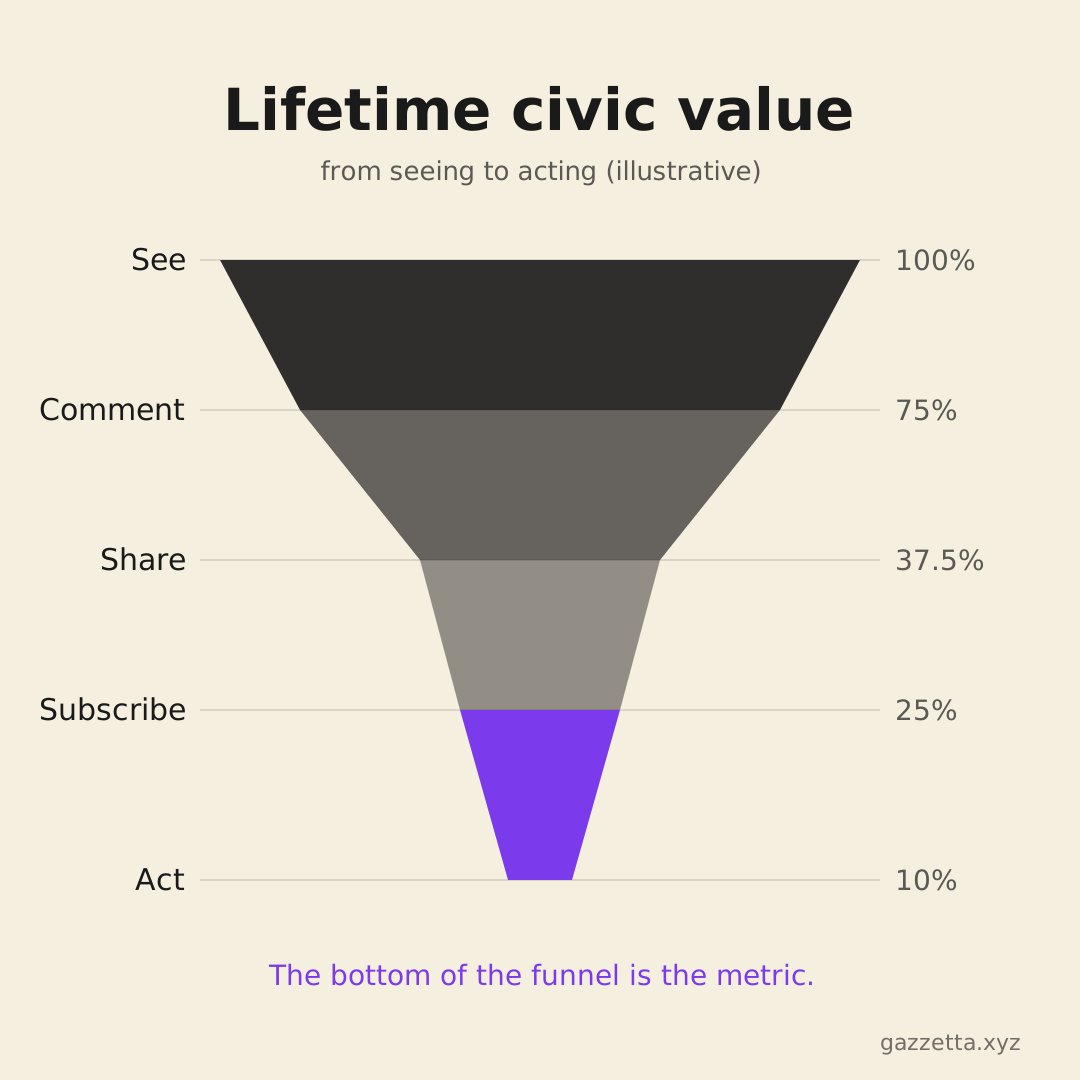
For nonprofit media this breaks at the first step, because there is no revenue. So replace revenue with the thing you actually exist to produce: civic action.
What counts as an action
You define this from your mission, and it has to be specific and observable. Where money is involved, it might be a tracked donation to a community cause you pointed readers to, a kind of reverse affiliate marketing where you drive support to the common good instead of earning commissions.
Where money is not involved: someone contributed to a crowdsourced investigation, used your guide to file a form, showed up at the meeting you covered, or passed your explainer to a neighbor who needed it.
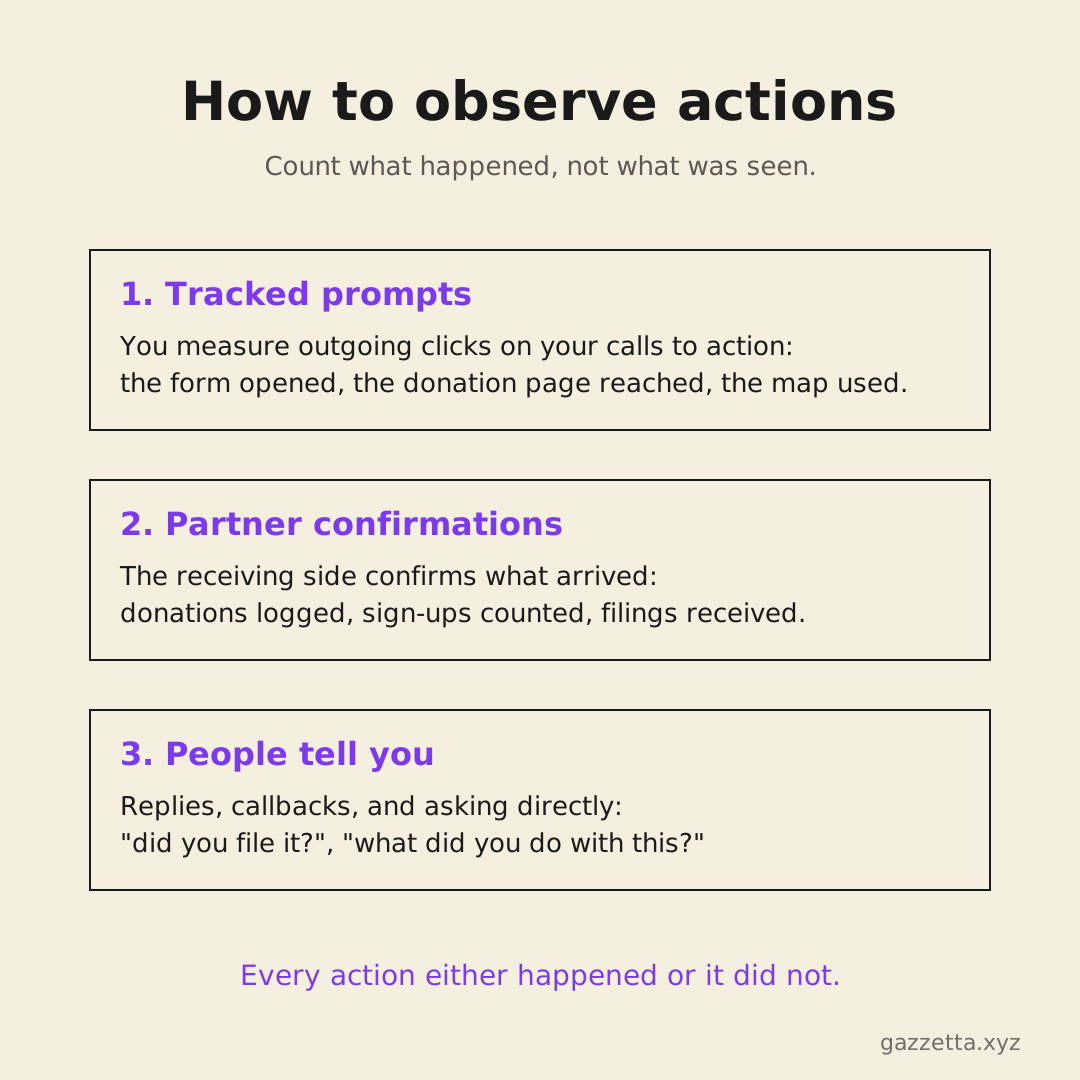
One warning: never pick actions because they are easy to count. What is easy to count is easy to game. Pick the actions your mission implies, then work out how to observe them, through tracked links, partner confirmations, and simply asking.
A worked example
A local newsletter has 10,000 subscribers. About 2,000 leave each year, so the average reader stays about five years. This year, readers took 110 observable civic actions.
Actions per reader per year: 110 divided by 10,000, which is 0.011. Multiply by the five years an average reader stays: 0.055.
In plain terms: about 6 actions per 100 readers over their time with you. That is the newsletter's lifetime civic value. Every part of it is checkable: real people, real actions, a real relationship length.
Why bother
Three benefits, in rising order of importance.
The number is yours. Reach is rented from platforms and can halve overnight when an algorithm changes. Civic actions happen inside a relationship you own, and no product decision in California or decree elsewhere can delete them retroactively.
The number is honest. Every action either happened or it did not. A funder can audit it, a team can rally around it, and it cannot be inflated by a viral fluke. Compare it quarter over quarter and you learn whether your service is deepening, which no reach number can tell you.
The number changes how you work. You cannot track civic actions without asking people to act on their own behalf, which forces the organization to operate audience-first and to adopt an explicit idea of civic progress in its calls to action. It quietly retires the View from Nowhere pedestal.
(Reading recommendation: The View from Somewhere, by Lewis Raven Wallace.)
Why small publishers should love it
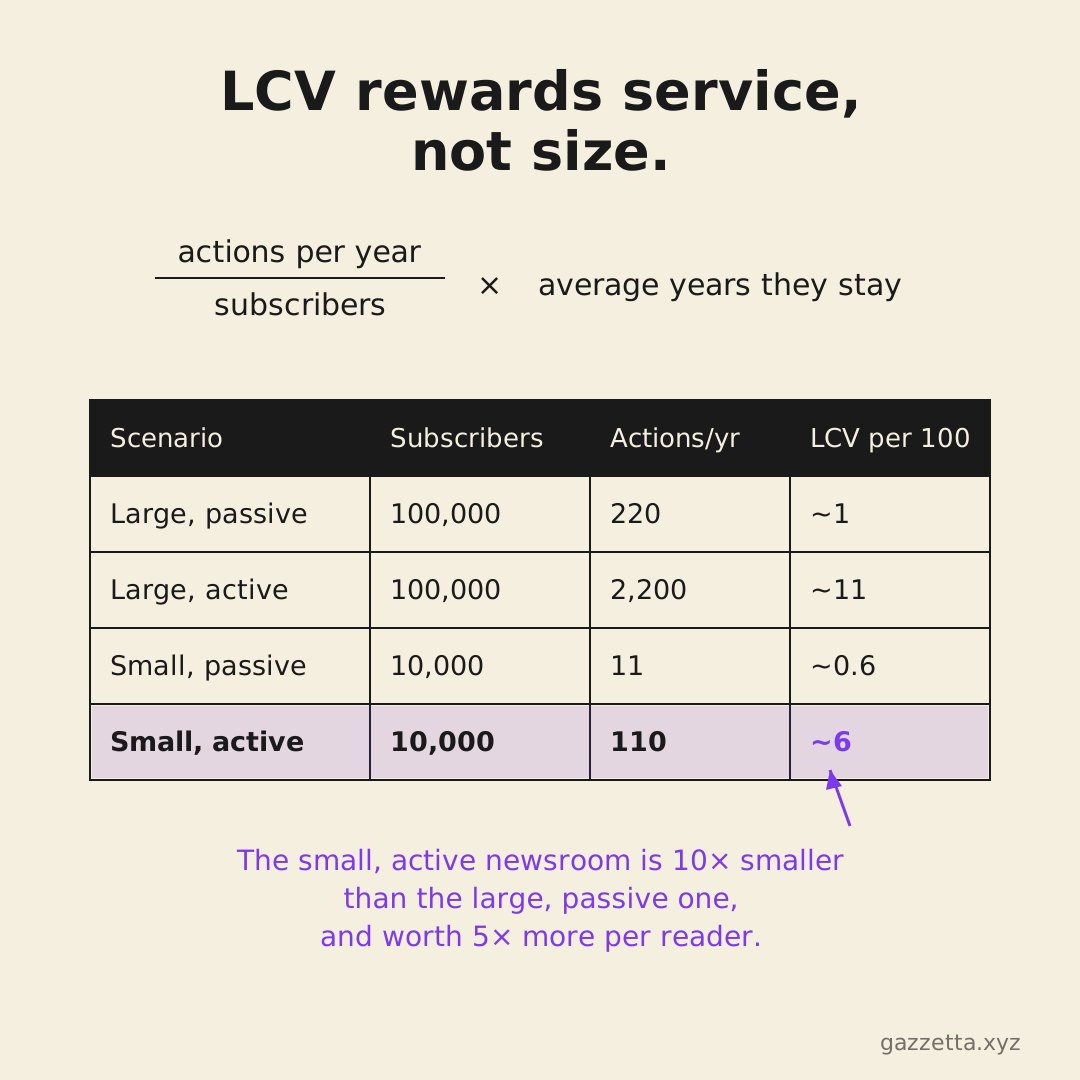
Lifetime civic value is a rate, not a volume. It measures how intensely you serve each relationship, not how many relationships you have.
Four scenarios, counting the same action at the same churn:
| Scenario | Subscribers | Actions per year | LCV per 100 readers |
|---|---|---|---|
| Large, passive | 100,000 | 220 | ~1 |
| Large, active | 100,000 | 2,200 | ~11 |
| Small, passive | 10,000 | 11 | ~0.6 |
| Small, active | 10,000 | 110 | ~6 |
The comparison that matters is the small active newsroom against the large passive one: ten times smaller, five times the civic value per reader. Reach makes that newsroom invisible.
This makes it legible, and it is the first number on which a local newsroom can outperform a national aggregator at the thing that actually matters.
What it does not do
The metric counts prompted, observable actions, so it undercounts the quiet impact, the reader who felt less alone, and it should be paired with listening, not replace it. The lifespan estimate is rough. And it does not prove your journalism caused the action in a scientific sense; it shows that the action followed your prompt inside a real relationship, which is a far more honest claim than any reach figure, and honest enough.
One more limit, maybe the most important. The number is not comparable across organizations. Your actions are yours: a filed form here, a donation there, and there is no exchange rate between them. It is not even comparable with itself once you redefine the action; change what you count, and you start a new series. What you are really measuring is one defined service, held steady over time, with an action moment at the end.
And honestly, that is fine. The point of lifetime civic value is not a league table or another dashboard but the point is the conversation it forces: what do we actually help people do, how would we know, and would anyone notice if we stopped.
A newsroom arguing about which action to count is already doing more strategy than one comparing pageviews.
Try it yourself
Actions per reader, over the life of the relationship. Type your numbers; it calculates as you go.
Formula: (actions ÷ subscribers) × (1 ÷ churn rate). Count only specific, observable actions your mission implies. What is easy to count is easy to game.
If you want to experiment with LCV in your newsroom, get in touch: hello@gazzetta.xyz.